Listen Now
0:00
OTTAWA — President Donald Trump ramped up the pressure on the Liberal government to cut a deal, but his latest escalation barely boosted the share of Canada’s trade previously hit with U.S. tariffs, and his threat to restrict access to government procurement is likely narrower than feared.
Still, the move to outright ban imports of some Canadian goods—including wine, beer and spirits—marks a major milestone in the trade war that could make it harder for either side to back down. “I think the escalation is now out of the hands of the negotiating teams and firmly in the hands of the political leadership of both countries,” said Jamie Tronnes, executive director of the Washington-based Center for North American Prosperity and Security. She suggested Trump has now lowered his chances of forcing Prime Minister Mark Carney into accepting a deal, with the damage to the relationship eclipsing that from the tariffs.
“It’s really hard to walk back from the added slight and anger that Canadian people are going to feel. It’s going to make it harder for Carney to ever come back to the table, although he absolutely needs to.”
Related Articles
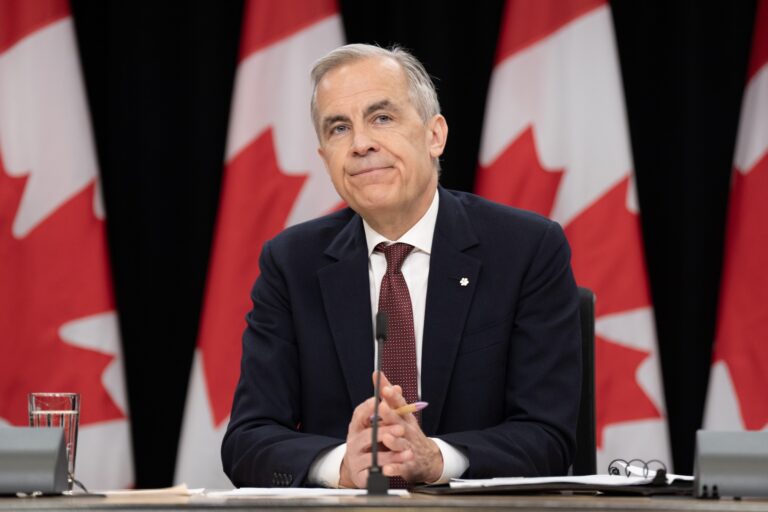
Canada-U.S. Trade Minister Dominic LeBlanc said he and his American counterpart are talking, but gave little hope that formal negotiations will resume any time soon. “When the U.S. is ready to engage, our government will work in good faith and constructively towards a more secure, mutually beneficial trading relationship that fully respects Canadian sovereignty,” he wrote Tuesday night.
The bans
Three presidential proclamations the White House published Tuesday night announced import bans on motorcycles, many alcoholic beverages, as well as whey (a milk byproduct often used in protein supplements) from Canada. An analysis by RBC Economics published Wednesday said 68 products caught up in the bans, which will take effect Sept. 29 at 12:01 a.m. EDT, were already covered by the 50 per cent tariffs that Trump imposed Aug. 22 under Section 338 of the Tariff Act of 1930.
“This marks an escalation, but with a 50 per cent tariff on these products, many were already likely too expensive for U.S. importers to buy,” wrote Nathan Janzen, assistant chief economist. “Therefore, the marginal impact of the change on the Canadian economy is likely relatively small (again, notwithstanding the significant impact on specific exporters targeted).”
Motorcycle manufacturer BRP, which also makes Ski-Doos, said in a statement Wednesday the ban would exclude its Can-Am Spyder and Canyon models made in Valcourt, Que., from the U.S. market, but the move would take some time to hurt. “The impact of these new U.S. measures are expected to be limited on our fiscal 2027, as the vast majority of production and shipments for the current season are completed,” said spokesperson Emilie Proulx.
More goods, but about the same value
In addition to the bans, Trump added 110 Canadian products to the list subject to Section 338 duties, including a greater variety of cheeses. Meanwhile, he removed tariffs on road salt, toilet paper, Portland cement and seven other products.
In his note, Janzen suggested there is not much increase to the total value of Canadian exports hit with those duties, which will take effect Sept. 15 at 12:01 a.m. EDT, based on 2025 trade data.
“The nuance is U.S. imports in 2025 of those 10 products removed from the tariff list were almost as large (about US$1.73 billion) as the total value of imports of the 110 products added (about US$1.85 billion),” he wrote. Moreover, the Section 338 tariffs, which do not come with a carve-out for the North American trade pact, will continue to affect about five per cent of Canada’s trade with the U.S.
Government contracts
On Tuesday afternoon, Trump lashed out at the Buy Canadian policies the federal government and several provinces brought in last year to help shore up the domestic economy after Trump first unleashed tariffs on Canadian goods. “That is not reciprocity, it is a Canadian Trade Scam. From now on, NO RECIPROCITY—NO ACCESS!” he wrote in a social media post.
Later that night, U.S. Trade Representative Jamieson Greer confirmed Trump ordered him and the General Services Administration (GSA), the U.S. federal agency that oversees procurement, “to remove [US]$50 billion dollars’ worth of Canadian-origin products” from that agency’s “Multiple Award Schedules.” This refers to a long list of pre-approved suppliers offering certain goods and services—often relatively mundane things like office furniture and flooring—at agreed prices.
In Canada, the equivalent is called a standing offer list. In the U.S., government buyers (including at the state and local levels) can use the Multiple Award Schedules like a catalogue for routine purchases. Fifty companies with Canadian addresses are currently on it.
How vendors on the list will determine whether a product “originates” in Canada isn’t clear, nor is how the U.S. government will police those decisions. No official documents about the directive had been published as of late Wednesday afternoon.
Despite the lack of clarity, share prices of Canadian firms that have contracts with the U.S. government fell on Wednesday. Shares in Montreal-based engineering firm AtkinsRéalis, for example, dropped by more than two per cent on the Toronto Stock Exchange. So did those for IT consulting company CGI.
Some Canadian companies—including both AtkinsRéalis and CGI—are on the GSA list through American subsidiaries. Another, helmet-maker Galvion, whose New Hampshire subsidiary is on the GSA list, boasts more square footage there and in a Vermont factory than at its Montreal headquarters.
Nowhere is safe
Sometimes it works the other way: ProAll, a GSA-listed manufacturer of concrete mixers in Olds, Alta., has been a subsidiary of Connecticut-based Terex since 2022. Another such company, Fredericton’s Teledyne CARIS, which sells ocean-mapping software as a subsidiary of a California parent, just landed a contract worth nearly US$10 million through a GSA arrangement.
However, for Cadex, a company in Richmond, B.C., that makes battery chargers and testing gear (think military radios and portable defibrillators), losing its GSA award isn’t going to make much difference, company controller Sapinder Braich said in an interview. The firm has been thinking of ending its registration in the program anyway.
“Business has been dropping,” Braich said. Government labs have done much of the buying of Cadex products through the GSA arrangement and they’ve lost funding, he said. Meanwhile, the program’s administrative burden has grown. “Basically, the ROI was not really making sense.”
Besides, the GSA multiple-award schedules are just one U.S. government contracting mechanism; sales that Cadex has made through the GSA lately (less than $100,000, Braich said) are dwarfed by what it sells to the U.S. government through other procurements.