Cryptocurrency has ballooned to a US$2-trillion industry, but it doesn’t get as much attention as other sectors of the same size. One factor is the fact that crypto markets operate around the clock and don’t have the same quarterly reporting requirements as public companies. To help rectify that, The Logic is introducing a recurring quarterly series assessing the overall state of the market, with a focus on Bitcoin, Ethereum and Cosmos’s Atom, three cryptocurrencies with strong ties to Canada.
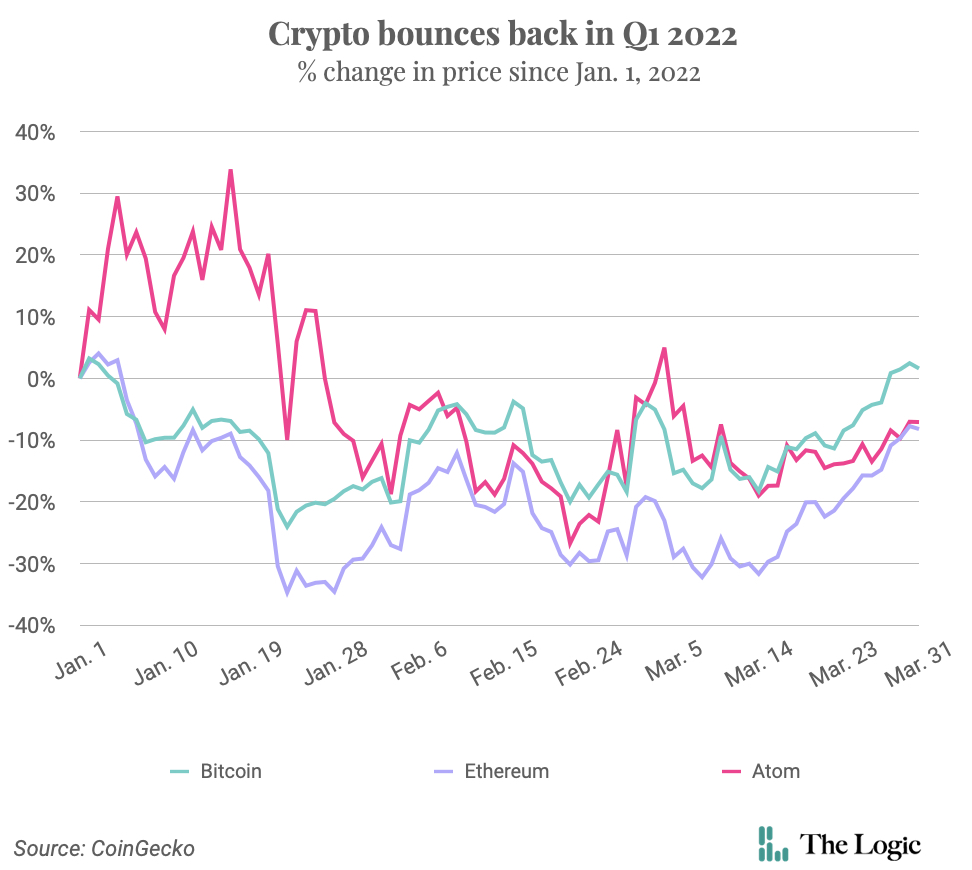
The cryptocurrency market underwent some steep drops in the first quarter of 2022, but Bitcoin ultimately finished approximately where it started, with the prices of other major coins recovering some, but not all, of their losses.
Talking Point
After reaching record highs in the previous quarter after a remarkable year, crypto has crashed back down to earth, although prices have somewhat recovered. U.S. President Joe Biden’s executive order announcing a “whole-of-government approach” to addressing the crypto sector and the high-profile use of cryptocurrencies by both sides in Russia’s invasion of Ukraine helped bring prices back up.
Bitcoin ended the quarter at US$47,063, rebounding after falling to a low of US$35,180 on Jan. 23. Ethereum finished down more than eight per cent. Cosmos’s Atom, which defied a downward trend in the rest of the market in January, ultimately declined about seven per cent from where it started.
Edward Moya, a senior market analyst at the brokerage firm Oanda who covers cryptocurrencies, pointed to rising interest rates and inflation as two factors hurting both stock prices and crypto, with many disappointed that Bitcoin failed to act as the inflation hedge its proponents had purported it to be. He said optimism around U.S. President Joe Biden’s executive order announcing a “whole-of-government approach” to addressing the sector and the high-profile use of cryptocurrencies by both sides in Russia’s invasion of Ukraine helped bring prices back up.
Sentiment among traders is “still mostly bullish, but I think it will be a lot harder for Bitcoin to recap those record highs,” Moya said, referring to November 2021, when the cryptocurrency rose above US$67,000, the pinnacle of a year of massive growth. He said he expects Biden’s executive order to help: “There’s a lot of optimism here.”
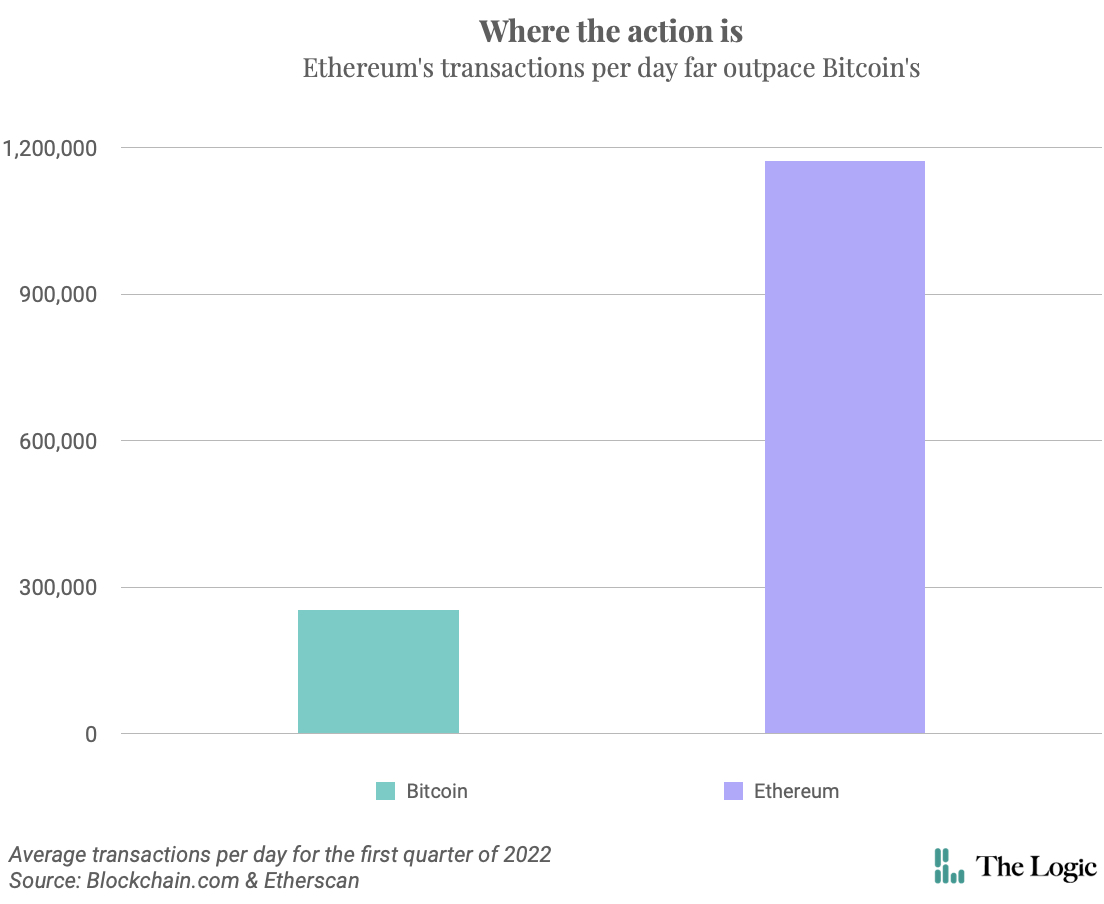
Bitcoin continues to be the crypto market leader by far, accounting for about 42 per cent of the sector’s total market capitalization, compared to second-place Ethereum’s 19 per cent. Ethereum, however, has hundreds of thousands more transactions taking place on it each day, thanks to its thriving ecosystem of activity in areas such as NFTs and decentralized finance, or DeFi.
There are increasing challenges to Ethereum’s dominance in DeFi, however. Competitors such as Cosmos software-based Terra, Osmosis and Binance Smart Chain, as well as Solana, Polkadot, Avalanche and others, are eating into its market share, a trend that has been taking place for over a year and continued in the first quarter of 2022.
Brian Mosoff, chief executive officer of Ether Capital, which invests in Ethereum, said many of these competitors promise higher speeds, better scalability and lower fees. “One of the ways that Ethereum still has remained dominant, despite higher transaction costs, is that it’s the most trusted base layer with the highest amount of security,” he said.
The NFT market saw a bump in both sales volume and dollar value early in the quarter, but both metrics ended down. NFT sales declined significantly from their peaks in August 2021, going from 150,000 to 220,000 sales per day to almost 11,000 on April 1.
While the initial frothy days may be over, Mosoff said he expects the NFT market to enter a more interesting building phase that’s less focused on price speculation, and more inclined to develop innovative products with staying power. He said he expects the best projects to survive, while future teams learn from last year’s successes and failures, similar to 2017’s “initial coin offering” boom and crash.
“A lot of people get skeptical that, you know, it’s a bubble and it’s just garbage. I don’t look at it that way. I think you have to go through this phase,” he said. “The formula that works is going to be building a community with staying power.”