Canada plans to delay the implementation of its new digital-services tax after more than 130 countries agreed on Friday to a global minimum corporate-tax rate and a new set of rules for taxing multinational firms.
Skip to content


News
Ottawa to delay digital-services levy following global tax deal
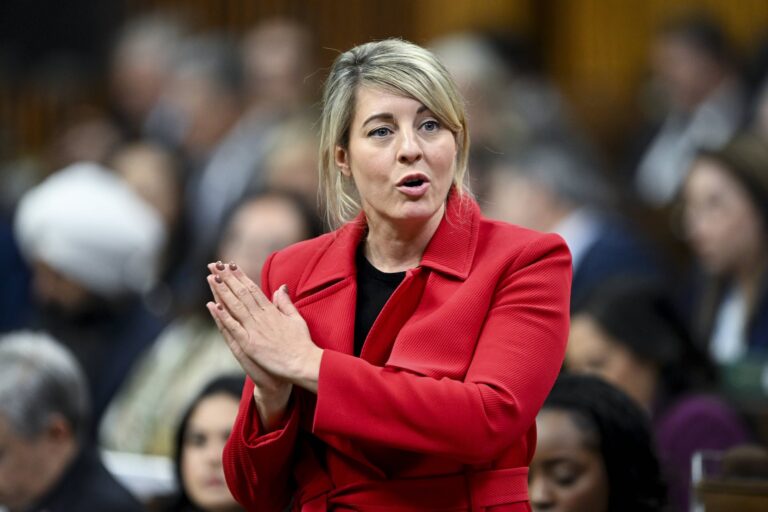
Finance Minister Chrystia Freeland speaks to reporters during a press conference in Ottawa in October 2021. Photo: THE CANADIAN PRESS/Sean Kilpatrick
Canada plans to delay the implementation of its new digital-services tax after more than 130 countries agreed on Friday to a global minimum corporate-tax rate and a new set of rules for taxing multinational firms.
Formal negotiations on the framework, led by the OECD, launched in June 2016, and the group published proposals in October 2019. Finance ministers and leaders from the G20 will validate the final deal later this month. The OECD said participating countries hope to sign a convention establishing the new system in 2022, and implement it in 2023. Governments will need to pass domestic legislation to do so.
Talking Point
OECD-led negotiations on a new system for taxing multinational corporations have ended with a deal that seeks to establish a new global minimum rate and bring in more revenue for market jurisdictions. The terms of the agreement could prevent Canada from implementing its plans for a domestic digital-services tax.
The agreement’s first pillar is designed to ensure multinational corporations pay tax in countries where they earn revenues, not just where they have offices, staff and other markers of physical presence. For firms with €20 billion-plus in annual revenue, the deal would reallocate some tax rights to so-called “market jurisdictions” where the companies make more than €1 million a year. Those countries would split the tax on a quarter of any earnings beyond the first 10 per cent.
Those provisions are meant to stop governments from imposing their own digital-services taxes (DSTs), which a number of countries, including the U.K. and France, have instituted to bring in revenue from large online platforms like Facebook and Alphabet.
The Liberal government proposed a Canadian DST in the April federal budget. It would require firms with annual global revenues of €750 million ($1.08 billion) that make more than $20 million of that from the “engagement, data and content contributions” of users in Canada to pay a three per cent levy on those earnings.
The measure was meant to take effect on Jan. 1, 2022, and remain in place “until an acceptable multilateral approach comes into effect.” Finance Canada estimated it would bring in $3.4 billion over the five fiscal years beginning 2021–22—just over 40 per cent of the net-new revenue that tax changes in the budget were supposed to generate.
The forthcoming convention to enact the deal “will require all parties to remove all [DSTs] and other relevant similar measures with respect to all companies, and to commit not to introduce such measures in the future,” according to the joint statement issued by 136 governments. And “no newly enacted” DST “will be imposed on any company” from Friday until either the end of 2023 or when the convention takes effect.
However, in a Friday afternoon statement, Finance Minister Chrystia Freeland said that while Ottawa will push forward with plans to create a framework for a domestic DST, it will delay the tax’s implementation. “To ensure that Canadians’ interests are protected in any circumstance, we intend to move ahead with legislation finalizing the enactment” of the DST by the start of next year, she said. If the global agreement “has not come into force” by the beginning of 2024, the government will impose the levy, retroactive to the start of 2022.
“Canada has a clear national interest in this multilateral deal,” Freeland said.
The 136-country statement suggests that “if there’s a [DST] that hasn’t yet been enacted in legislation, then, it will not apply to companies in that period,” said Brian Jenn, who previously represented the U.S. on digital-tax policy at the OECD. One that has been passed but that companies haven’t yet started paying “might still take effect.” But the statement is “at best a moral commitment on the part of countries to not enact DSTs,” said Jenn, now a Chicago-based partner at law firm McDermott Will & Emery. “It’s in no way a binding, legal commitment.”
The Liberal government did not include the digital-services tax in its June budget-implementation bill.
The agreement “will be really good for Canada’s bottom line,” Freeland told reporters on Wednesday, in response to The Logic’s questions. “It will prevent the current international race to the bottom in corporate taxation, and will ensure that the world’s biggest companies pay taxes where they do business.”
Under the deal’s second pillar, firms making more than €750 million also will be subject to an international tax floor of 15 per cent, which the OECD estimates will generate US$150 billion in new revenue for governments each year.
Countries that have historically used lower rates to attract business were among the last holdouts to the international agreement. Ireland, which charges 12.5 per cent, signed on Thursday. Kenya, Nigeria, Pakistan and Sri Lanka remain outside the agreement.
The deal may face domestic challenges in several countries. Canada’s current tax rules “would need to be substantially overhauled to align” with the OECD’s proposed system, the C.D. Howe Institute wrote in November 2019. The Liberal minority government will require support from opposition parties to pass any such legislation. During this summer’s federal election, the Conservatives and NDP both promised to make tech giants “pay their fair share of taxes.” But the Tories oppose Canada “signing onto a global minimum tax rate.”
Even once a model multilateral convention is presented, “there will be an extended period over which countries actually implement this agreement—or don’t,” said Jenn, noting that the latter is a “real possibility.” He questioned whether the U.S. Congress will take the necessary legislative action to enact the first pillar, “given that this is a fairly controversial issue.” Many of the multinationals that the redistribution measure targets are headquartered in the U.S. “It is not clear whether those countries that implement [those rules] will effectively be able to tax U.S. companies without the [U.S.] actually implementing [them as well],” said Jenn.
Freeland and Finance Canada have declined to specify when the government plans to replace the domestic DST with the multilateral system and whether switching will bring in more or less tax revenue, citing the ongoing negotiations. “We need to dot all the Is and cross all the Ts before we can get that specific,” she said in July, responding to a question from The Logic. ‘But what I can say with absolute confidence is that this OECD-level agreement … will be a net benefit for Canada, and will bring in revenues to [the government].”
Jason Oxman, CEO of the Washington, D.C.-based Information Technology Council, said in a statement that the group is “encouraged by the governments’ commitment not to impose newly enacted unilateral tax measures on any company,” and called for the withdrawal of existing ones. The lobby group—whose members include Amazon, Facebook and Google—has previously pushed the U.S. government to oppose Canada’s DST.
This story has been updated with comment from the Canadian government.
Loading...
Thanks for sharing!
You have shared 5 articles this month and reached the maximum amount of shares available.
CloseThis account has reached its share limit.
If you would like to purchase a sharing license please contact The Logic support at [email protected].
CloseGift the full article!
You have gifted 0 article(s) this month and have 5 remaining.
Recipients will be able to read the full text of the article after submitting their email address. They will not have access to other articles or subscriber benefits.
Photo: THE CANADIAN PRESS/Sean Kilpatrick
Most Popular This Week




In-depth, agenda-setting reporting
Great journalism delivered straight to your inbox.
Exclusive
Canada’s new AI strategy includes $500M fund to back key firms
Briefing
U of T researchers use free AI models to create dangerous cyberattack ‘worm’
Canada to strengthen forced labour ban after U.S. threatens 10% tariffs
Shopify ups share buy-back program to US$5B
Best business newsletter in Canada
Get up to speed in minutes with insights and analysis on the most important stories of the day, every weekday.
Exclusive events
See the bigger picture with reporters and industry experts in subscriber-exclusive events.
Membership in The Logic Council
Membership provides access to our popular Slack channel, participation in subscriber surveys and invitations to exclusive events with our journalists and special guests.