OTTAWA — Canada’s new industry minister said Prime Minister Mark Carney has given her 60 days to cut red tape in her department and speed up the processes that drive the government’s marquee innovation programs.
Skip to content


News
Carney has given me 60 days to cut red tape, says the new industry minister
Mélanie Joly invokes ‘wartime philosophy’ as she pledges to make Canada’s innovation funding programs faster and more efficient
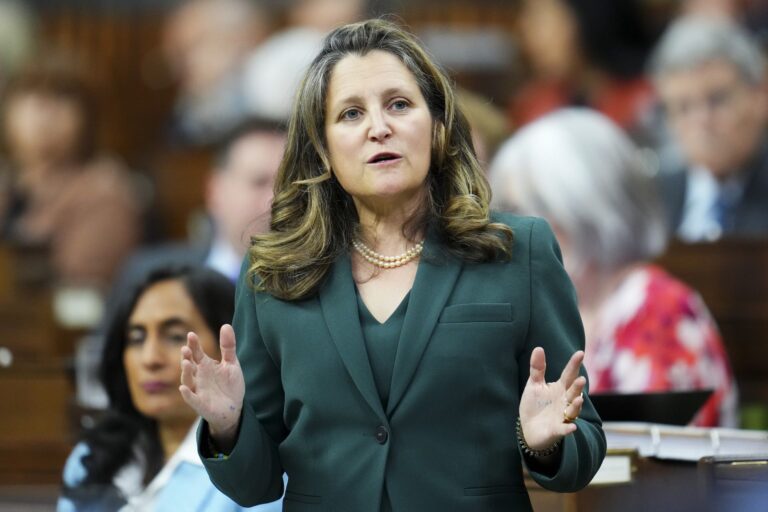
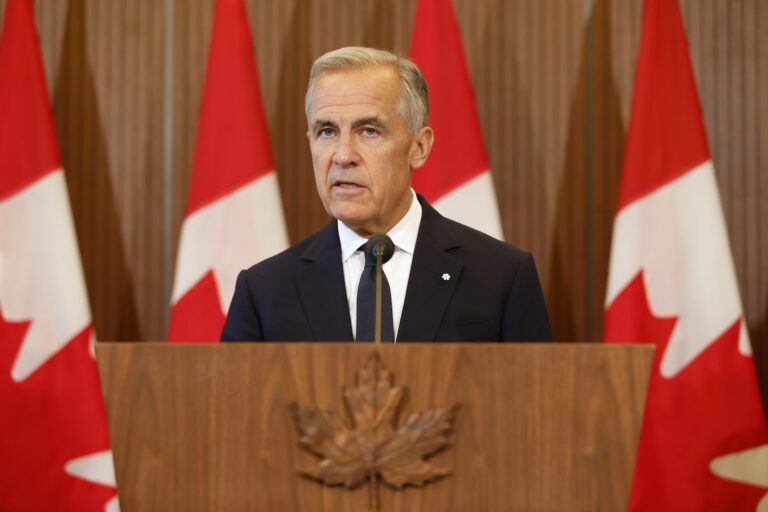
Newly appointed Industry Minister Mélanie Joly, pictured here in 2023, says Prime Minister Mark Carney has given her 60 days to cut red tape in her department and in the country’s innovation funding programs. Photo: The Canadian Press/Adrian Wyld
OTTAWA — Canada’s new industry minister said Prime Minister Mark Carney has given her 60 days to cut red tape in her department and speed up the processes that drive the government’s marquee innovation programs.
“We are a war cabinet, and we need to have a wartime philosophy, culture in making sure that we can do things quickly and deliver results in a speedy manner,” Industry Minister Mélanie Joly said in an interview with The Logic on Friday.
Talking Points
- One of the first jobs for newly appointed Industry Minister Mélanie Joly is to cut the red tape hobbling Canada’s largest innovation programs and speed up approvals
- Also on the agenda: protecting jobs and industries hit by the trade war and creating an industrial policy around military procurement and defence
Tech industry groups have long clamoured for major reforms to programs such as the Strategic Innovation Fund (SIF) and Scientific Research and Experimental Development (SR&ED) tax incentives. Those calls have gained new urgency in the face of the uncertainties brought on by the trade war with the United States. Some in the industry see them as a means through which the government could shield Canadian businesses and keep intellectual property from migrating south.
Joly said she’s planning to look at that, but in the meantime, she’s focused on making the programs work faster and more efficiently. “The form for the Strategic Innovation Fund cannot be 50 pages,” Joly said. “That’s enough.”
As foreign affairs minister, Joly served as Canada’s top diplomat for more than three years under former prime minister Justin Trudeau, but said she asked the prime minister to let her head up Innovation, Science and Economic Development Canada. “I left the diplomatic front of the trade war with the U.S. to the economic front,” she said.
Related Articles


Her top priority, she said, is protecting the sectors hardest hit by U.S. tariffs and economic uncertainty, including the automotive, steel and aluminum industries. But Carney has also asked her to go on the offensive. “We’re at the start of an industrial transformation, the transformation of this economy,” Carney told reporters after appointing his cabinet last week. “Madame Joly, as minister of industry, is going to help lead that.”
To do that, she said, she’s planning to build an industrial policy around Canada’s military.
“We will be making the biggest investments since the Second World War in defence,” Joly said, in reference to Canada’s commitment to NATO to spend two per cent of its GDP on defence by 2030. The military procurement involved in reaching that target should be used to create manufacturing capacity and jobs in the auto, aerospace and tech sectors, she said, rather than relying too much on the U.S.
“When I’m talking about defence, I’m ultimately talking about dual use,” she said. The goal is to support infrastructure, goods and capacity that have a “civil” use and that benefit Canadians as well as Canada’s military efforts.
The energy sector and artificial intelligence will also be a major focus, she said, adding that all three sectors are closely linked, and you can’t build one without the others.
That doesn’t mean the government has abandoned its big bets made on electric vehicles under her predecessor, François-Philippe Champagne, now Carney’s finance minister. As Joly was sworn in last week, Honda paused its $15-billion plan to expand EV production in Ontario. Days later, Stellantis pulled the plug on production of the 2026 Dodge Charger EV. Both companies cited lagging demand and the economic uncertainty of the trade war.
Conservative Leader Pierre Poilievre’s new industry critic, Raquel Dancho, offered the latest news about Stellantis as proof that the Liberals’ EV strategy isn’t working.
“Billions of taxpayer dollars were invested by the Liberal government with promises of growth and job security,” Dancho said on social media Thursday. “This is another sign things aren’t going as planned.”
Despite the setbacks, Joly told CBC last week that Canada should continue to invest in the EV industry because “we think that’s the future.” In her interview with The Logic, she said you can’t divorce EVs from the rest of the auto sector if you want to protect tomorrow’s jobs.
“For me, the most important thing, what I’m obsessed with, is keeping jobs at the same conditions and creating jobs,” she said.



Loading...
Thanks for sharing!
You have shared 5 articles this month and reached the maximum amount of shares available.
CloseThis account has reached its share limit.
If you would like to purchase a sharing license please contact The Logic support at [email protected].
CloseGift the full article!
You have gifted 0 article(s) this month and have 5 remaining.
Recipients will be able to read the full text of the article after submitting their email address. They will not have access to other articles or subscriber benefits.
Photo: The Canadian Press/Adrian Wyld
Most Popular This Week


In-depth, agenda-setting reporting
Great journalism delivered straight to your inbox.
News
Canadian universities are still struggling to commercialize their research, new data shows
Briefing
Descartes buys freight software firm Tai for US$100M
Big businesses see sovereign AI as an edge—if they know what it is
Scotiabank beats profit estimates as capital markets surge
Best business newsletter in Canada
Get up to speed in minutes with insights and analysis on the most important stories of the day, every weekday.
Exclusive events
See the bigger picture with reporters and industry experts in subscriber-exclusive events.
Membership in The Logic Council
Membership provides access to our popular Slack channel, participation in subscriber surveys and invitations to exclusive events with our journalists and special guests.