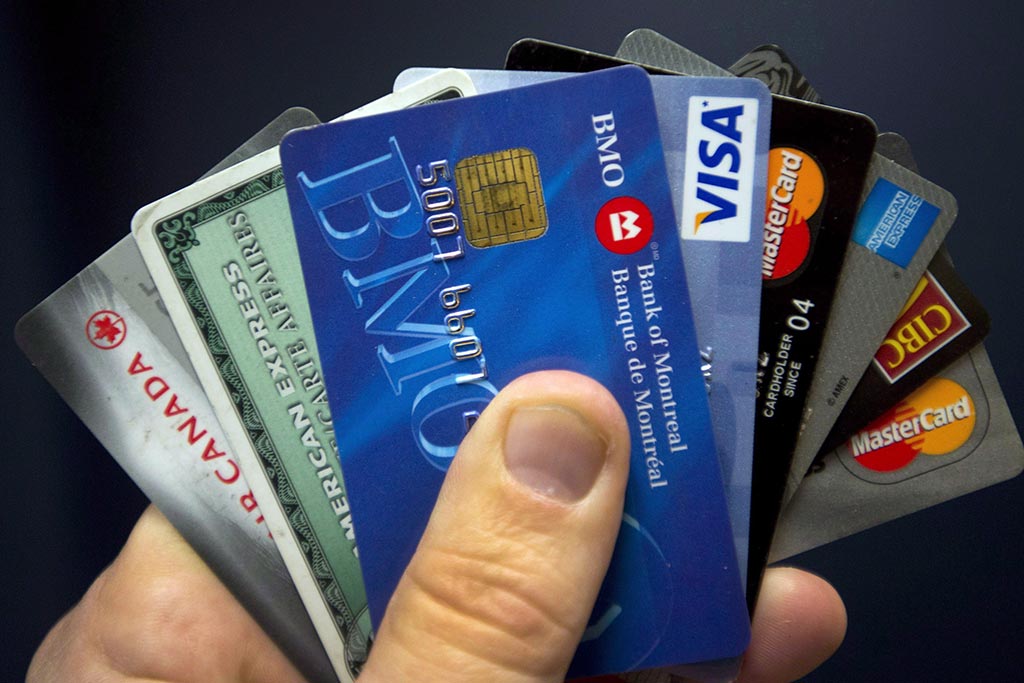
Interac and Visa have been providing data about debit- and credit-card transactions to the federal finance department to assist its efforts in monitoring the economic impact of COVID-19.
Ottawa’s use of the aggregated corporate information is part of a trend that’s seen governments and businesses seek out new sources of more timely data, as official statistics initially struggled to keep pace with the pandemic.
Talking Point
Finance Canada’s in-house economic analysis wing is using aggregated data about credit and debit card transactions sourced from payment networks Visa and Interac in its monitoring of COVID-19 impact. Economists say the information, if used properly, could help policymakers formulate a better response to the pandemic.
After the pandemic hit, Finance Canada proactively sought “timelier high-quality data” from companies to improve its economic monitoring, according to a memo prepared by two department economists in November 2020 for then-deputy minister Paul Rochon.
“Interac and Visa have both agreed to share some of their proprietary data, which have been integrated into our economic monitoring,” states the memo, which The Logic obtained via access-to-information request. “This is especially useful since data from Statistics Canada do not capture well some types of consumer spending that have been worst hit, for example in restaurants and hotels.”
The department’s economic- and fiscal-policy branch analyzes and forecasts the state of Canada’s economy, and its advice informs program decisions and budgets. In response to questions from The Logic, Finance Canada declined to specify in which reports or monitoring products it’s using the card data, or to name all the companies from which it has received such information during the pandemic. Visa and Interac provide “highly aggregated information, such as provincial and national level data” to the department under non-disclosure agreements, said spokesperson Anna Arneson, adding that “no information on individual cardholders is shared.”
Mastercard has also shared findings from its retail-sales reports and special COVID-19 research with Finance Canada, communications vice-president Sandra Benjamin told The Logic. American Express did not respond to a request for comment.
Visa and Interac are providing different levels of detail, according to the memo. Interac’s data includes the total number of transactions and amount spent, broken down by province, merchant categories and market segments, allowing officials to monitor “dollars spent by debit cards in fast food stores in Manitoba,” for example.
By contrast, Visa’s reports are weekly, and include year-over-year growth rates at the national level in broad sectors. The memo suggested Rochon ask the company for more detailed data, including regional and industry breakdowns, as well as total dollar figures, at a scheduled early December meeting with North American president Oliver Jenkyn. Such information would allow the department to study the impact of COVID-19 restrictions and—when combined with benefits usage—federal support programs on spending, the document states.
Visa began providing Finance Canada with “aggregated payment volume data under a non-disclosure agreement” in March 2020 to show “the dramatic shifts in economic activity resulting from shutdowns, social distancing, and travel restrictions” and inform policymaking, said Jay Dorey, vice-president of global government engagement.. Both the department and the payments company said the Rochon-Jenkyn meeting in December was cancelled.
Interac has been sending the department “transaction and dollar value statistics broken down by province and major retail categories” since July 2020, said Kirkland Morris, vice-president of external affairs. He added that the data is aggregated, anonymized and does not contain demographic or consumer-segment information.
Since the start of the pandemic, a number of payment networks, banks and other financial-services companies have published indicators of economic activity based on aggregated, anonymized transaction information, while tech platforms’ measures of mobility and restaurant reservations have attracted coverage. “There was just this insatiable appetite to try to get as close to real-time data [as possible], desperately searching to see how badly things were breaking,” said Don Drummond, an adjunct professor at Queen’s University’s School of Policy Studies, who called Finance’s move “a great idea.”
Anonymized, aggregated information drawn from the payments system may be a few days delayed, compared to a month or more for traditional economic data from Statistics Canada, noted Nikita Perevalov, Scotiabank’s director of economic forecasting. While the indicators must not be too specific to prevent customers from being identifiable, the firm is able to see where within sectors people are still buying, reporting that “goes deeper than the official statistics.”
Scotiabank recently found that while retail spending had dropped amid renewed COVID-19 restrictions, business transactions continued to rise, a trend borne out in StatCan’s stronger-than-expected estimate of GDP growth in January. Access to more timely economic data could ensure that, say, the Bank of Canada doesn’t “spook the markets” with a worse-than-necessary outlook, said Perevalov, who previously worked for the monetary-policy authority.
Finance Canada’s move isn’t unprecedented. Following the stock-market crash of October 1987, Drummond, then-head of economic analysis, called the CFOs of the Big Six banks weekly for similar information about credit-card transactions. “We were at a little bit of a loss what to do with the data,” since the department hadn’t worked with it before, Drummond recalled. “But I did have a feeling [that] if they absolutely showed credit transactions were crashing, that we should probably be very worried.” They didn’t, and Canada didn’t suffer a recession.
Real-time and high-frequency data can be useful for spotting “really sharp breaks” like a 30 per cent swing in transactions, rather than more subtle changes, according to Drummond. He warned that such measures are volatile. “You have to be really careful about spurious fluctuations in it that aren’t really real,” he said, noting that, in the case of card transactions, a one-off delay in posting payments could be misinterpreted.
StatCan did not answer The Logic’s questions about Finance Canada’s use of private-sector data in economic monitoring. But chief statistician Anil Arora has previously said such measures are not a substitute for his agency’s work. “Our aim is to make absolutely certain that the information that we’re putting out is actually representative,” he told The Logic in September 2020, noting that a company’s visibility is often restricted to its customer base. Arora called on private-sector organizations to be transparent with the public about the limitations of their data, and to partner with the agency.
In November 2018, StatCan paused a pilot project to collect aggregated, anonymized transaction data from nine banks and financial institutions as well as to use information from a credit bureau following concerns from MPs and the launch of a privacy commissioner investigation.
Two years on, Drummond and Perevalov suggest attitudes may be changing. If privacy concerns are adequately addressed and the data is “helpful for addressing whatever the economic conditions are,” Perevalov said, “I think the public would be a bit more receptive.”