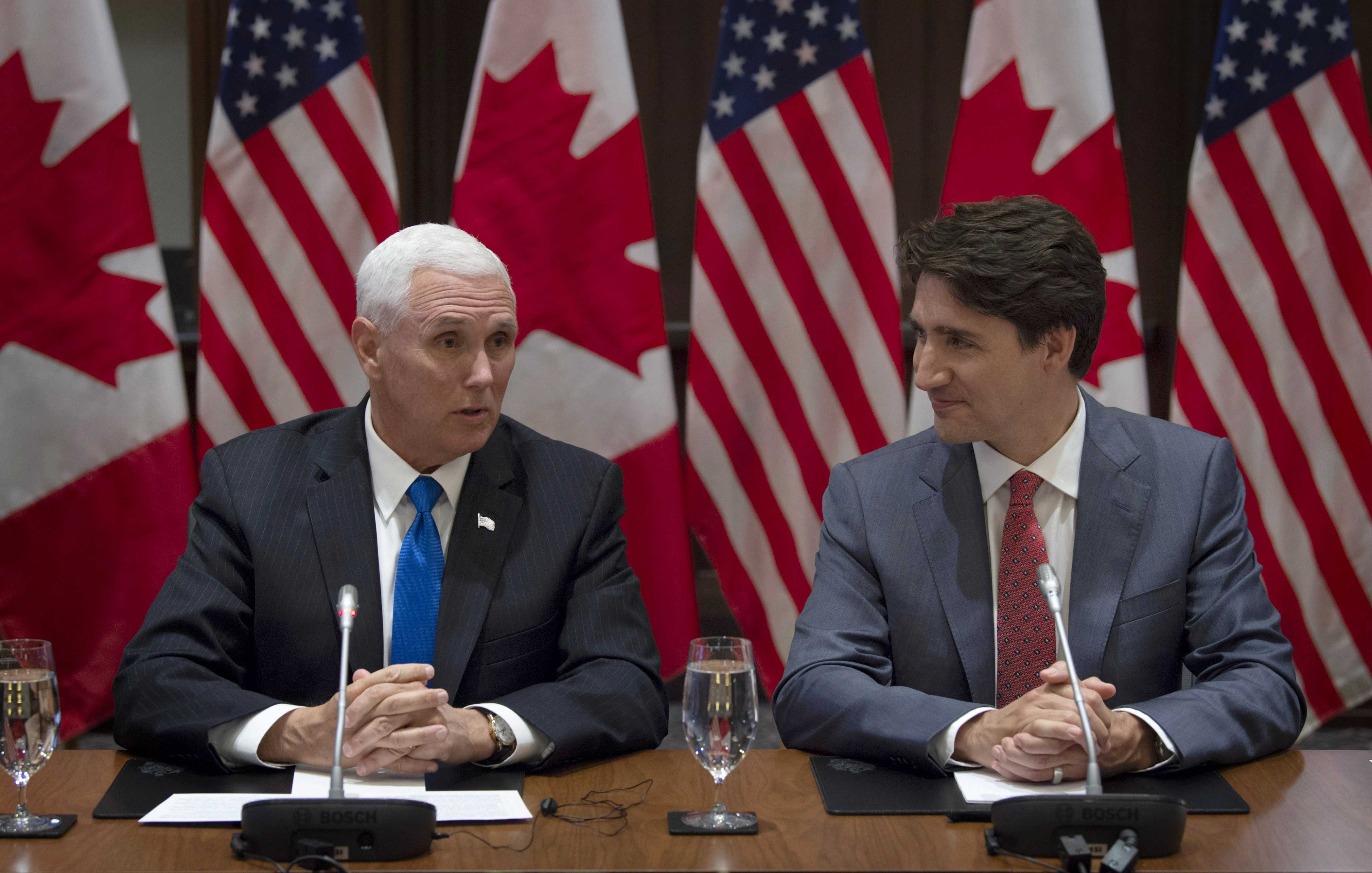
The federal government expects concessions it made in its new trade agreement with the United States to raise drug prices, but it has not agreed to requests made by provincial governments in Quebec, Alberta and New Brunswick to cover those costs.
A memo prepared for Health Minister Ginette Petitpas Taylor—obtained by The Logic via access-to-information request—details how Canada’s agreement to extend patent protection terms under the United States-Mexico-Canada Agreement (USMCA) could raise drug prices and make critical treatments less accessible to Canadians.
The federal government, meanwhile, does not intend to shoulder the additional costs, which are estimated to hit at least $169 million by 2029. “Increased drug costs will be borne by a combination of [provincial and territorial] governments, private plans and consumers,” reads the memo.
Talking Point
Ottawa is concerned that concessions it made in signing the new USMCA with the United States and Mexico could make certain prescription drugs more expensive and less accessible. The federal government has not agreed to cover the additional costs. Rather, provinces and territories, along with insurance plans and consumers, are expected to foot the bill.
“In the course of the negotiations, Canada made a number of concessions to the U.S., including several that will impact on the Health Portfolio,” reads the document, dated Oct. 19, 2018, less than a month after USMCA was signed.
“These concessions … will likely require legislative and regulatory amendments, have cost implications for Canada’s health system and/or may impact the Health Portfolio’s future policy flexibility.”
Last week, governments in Canada, Mexico and the United States sent the deal for ratification. At the time, Prime Minister Justin Trudeau said it was a “big day for Canada.”
Provincial officials, however, struck a less positive tone. In the memo, Health Canada officials noted that several provinces have expressed concern over the cost of the changes. The memo indicates that officials from Alberta, New Brunswick and Quebec have asked the federal government if it would cover any of the additional costs that stem from the concessions, like the previous federal government did after Canada signed a free-trade deal with the EU in 2014. “To date the government has not signalled a commitment to do so,” the memo reads.
“We are concerned this may have cost implications on provincial drug plans,” said Jessica Lucenko, a communications director for the Alberta government.
Noémie Vanheuverzwijn, communications director for the health ministry in Quebec, said the province’s health minister was evaluating the potential impacts alongside other provinces. “Quebec could also seek compensation from the federal government if it finds that its drug costs are increasing because of the terms of the USMCA,” said Vanheuverzwijn. New Brunswick’s health department did not reply to request to comment.
Petitpas Taylor’s office directed questions about the memo prepared for her to Global Affairs Canada. John Babcock, a spokesperson for Global Affairs, did not directly answer questions about whether other provinces or territories had raised concerns about the costs.
“The government is committed to taking action to reduce the cost of drugs for Canadians, and is working with provinces and territories in this regard,” said Babcock.
In March, the federal government announced a national pharmacare strategy intended to reduce drug costs by negotiating prescription drug prices on behalf of provinces and territories, and spending up to $1 billion over two years, starting in 2022, on high-cost drugs for rare diseases.
Under the new trade deal, Canada agreed to increase the data-protection term for biologic drugs from eight years to 10 years. It also agreed to expand the definition of biologics to include more substances such as blood, which will require amendments to the U.S. Food and Drug Act (FDA).
Biologics are used to treat a range of both common and rare diseases, including Crohn’s disease, arthritis and certain cancers. They are created from living organisms or contain organic molecules, whereas standard pharmaceuticals are synthesized from chemicals. Because they contain living materials, they are subject to more extensive testing than other drugs and are more expensive to develop and purchase.
Canada also agreed to patent-term adjustments (PTAs), in which patent applicants are compensated for long delays in having their patent applications processed. Canada has opposed implementing PTA policies in previous trade agreements “because of the concern that it would increase the period of market exclusivity of drugs,” the document reads. “When implemented, PTA could provide up to three additional years of market exclusivity to patent holders resulting in extended delays to the introduction of generic drugs.”
The report also raises concerns that patent applicants could “stack” the PTA benefit on top of the pre-existing Certificates of Supplementary Protection, an allowance that gives inventors up to two years of market exclusivity for processing delays.
Taken together, the concessions could allow biologics market exclusivity for up to 15 years—up from the current maximum of 10 years—limiting competition between drugmakers and delaying lower-cost medications from entering the market.
“The exact cost of these obligations is difficult to quantify, will vary from year to year, and will depend on a range of variables, such as the specific drug benefiting from a longer period of protection, overlap with other market exclusivity mechanisms, the availability and relative cost of generic or biosimilar versions, and how widely the drug is prescribed,” the document reads.
Changing the Patent Act—which is the jurisdiction of Innovation, Science and Economic Development (ISED)—is one way to limit the risks that extended patent protections would have on Canada’s healthcare system, the report notes. “Health Canada will work with ISED and legal analysts to determine ways to reduce ‘stacking,’” it reads.
Biologics represent the largest proportion of public drug spending in Canada, according to the Canadian Institute for Health Information. Provincial drug plans’ total spending rose by 20 per cent—from $6.5 billion to $7.8 billion—between 2010 and 2017; about 73 per cent of that growth is attributed to biologics, with their market share growing from 18 per cent to 27 per cent during that period, according to data from the National Prescription Drug Utilization Information System (NPDUIS). Those figures exclude public spending in Quebec, hospitals and other institutions.
The growth in the biologics category—and prolonging their patent protection terms—primarily benefits U.S. companies. Of the top 10 patented medicines sold in Canada in 2017, seven were biologics, five of which were manufactured by American pharmaceutical companies.
In a report published in April, the Parliamentary Budget Officer estimated that the USMCA decision to extend market exclusivity for biologics could cost Canada’s public health sector at least an extra $169 million in 2029, with that cost increasing each year thereafter. That number doesn’t include costs associated with any PTAs that would result from the USMCA.
Canada will have four and a half to five years to transition to these new rules after the USMCA comes into effect.