OTTAWA — Canadian airports and airlines want Ottawa to let air travellers use digital ID on their phones and biometric means like facial recognition to board flights, saying they need to keep pace with international peers who are moving on from traditional identification.
Skip to content


News
Canadian airports want to scan your face or phone, not your passport
Major airports are pushing Ottawa to let them use biometrics as valid ID, saying it would simplify travel. But what happens to all that data?
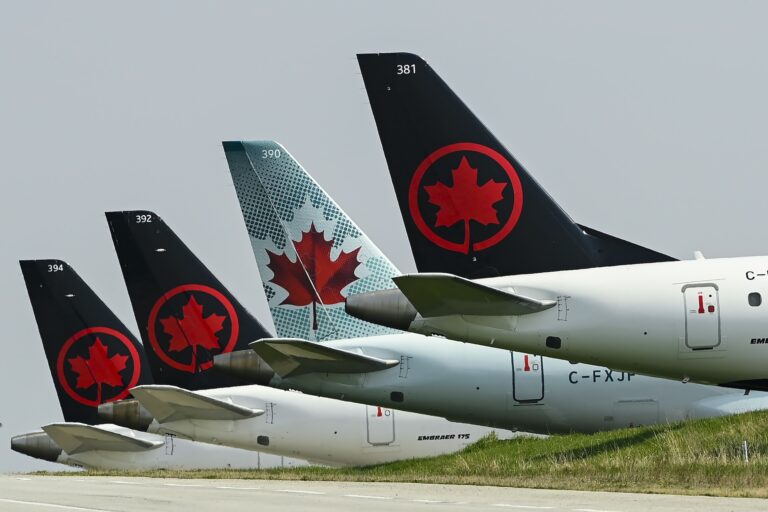
Biometric scanning technology could transform the travel experience at Canadian airports, but raises data-security concerns. Photo: The Canadian Press/Mark Blinch
OTTAWA — Canadian airports and airlines want Ottawa to let air travellers use digital ID on their phones and biometric means like facial recognition to board flights, saying they need to keep pace with international peers who are moving on from traditional identification.
The Canadian Airports Council, the National Airlines Council of Canada and five Canadian airports asked Ottawa to bring its regulations into line with countries that have digitized identity-checking processes at their airports.
Talking Points
- Canadian airports have asked the federal government to bring its regulations in line with other countries that allow passengers to use digital ID and biometrics to clear security before they board their flights.
- While new technology could move passengers through the airport more quickly and eliminate the long lines so often associated with air travel, it also raises privacy and data-security concerns that Ottawa has not yet addressed.
“Canada is behind our international peers in ensuring the travel process[es]—security screening, customs and border procedures and boarding—are modern, efficient, simple and biometrically based,” the Canadian Airports Council (CAC) said in its submission to the House of Commons finance committee as input for the federal budget. The organization represents more than 100 Canadian airports.
The new technology could fundamentally change the air-travel experience, which can include long queues to check in, get through security and board flights, said former Air Canada executive John Gradek, who now lectures on aviation management at McGill University. The new systems would scan passengers’ faces at such pinch points, and use ticket information and databases of trusted travellers to determine whether they are where they should be.
Related Articles

Though airports say it would help them compete globally for connections and tourism, it raises concerns about how Canadians’ most sensitive data would be stored and shared.
Walking through fully digitized airports like the ones in Dubai and Singapore can feel “eerie,” Gradek said. The familiar routine of checking in and waiting to drop off your luggage or scan your bag through security doesn’t apply.
“Nobody is scanning my bags. I’m not walking through an X-ray machine or a detector machine,” he said. “You just walk—you walk through.” If the systems identify discrepancies in someone’s information, security personnel quickly arrive and pull the person aside, Gradek said.
Canada is still a long way off from offering that experience, though many airports have already installed basic equipment, including retinal scanners and cameras, he said. “It’s pretty close to being ready for prime time.”
Transport Canada and Public Safety Canada started looking into digital ID verification after the COVID-19 pandemic, promising to change the manual, paper-based processes currently used in airports. The idea was to let passengers verify their identities at check-in, either remotely or at the airport, and automate the rest of the process using facial recognition technology. As of 2024, the Canadian Air Transport Security Authority (CATSA) was still working on pilot projects and developing standards for a digital process using biometric screening.
The question from a privacy and personal security perspective is how the data collected by that equipment will be stored, and whether it is shared with other airports and governments around the world. “That, to me, is a big danger,” Gradek said.
Facial comparison tech is already in use at 238 airports in the U.S., most commonly by Customs and Border Protection officers who take pictures of travellers and apply recognition technology to confirm their passports really belong to them. In six U.S. airports, including Los Angeles International Airport and John F. Kennedy International Airport in New York, airport security uses a cloud-based facial biometric comparison to let passengers move through security and baggage drop-off without pulling out ID.
Customs and Border Protection stores the biometric information of passengers who are U.S. citizens for 12 hours. (American citizens can also opt out of biometric scanning altogether.) But the agency can store the information of foreign nationals for up to 75 years.
The U.S. also allows passengers to scan digital IDs instead of showing a physical passport or driver’s licence at 250 security checkpoints across the country.
For airports in Canada to use the technology, the federal government would have to update regulations and change the law to let security-screening officers verify passengers’ identities.
Gradek said regulations must also be updated to govern what airports can do with the data they collect. “Capturing data, managing data, storing the data and distributing the data is not covered in today’s regulatory environment,” he said. CAC has called for a biometric policy that would set privacy and technology standards for all federal departments and agencies.
Time may be of the essence, as Canada’s largest airports are making big investments to modernize their infrastructure. Montréal-Trudeau International Airport announced in July a $10-billion revamp backed by the Canada Infrastructure Bank in anticipation of a higher volume of travellers over the next decade. Last year, Toronto Pearson International Airport, one of those calling for the regulatory change, announced a multibillion-dollar plan to update its terminals over the next 10 years.
Now is the time to plan for new systems, the CAC said in its submission.
Data-security issues aside, biometric scanners could one day save airport space now occupied by long lines and security-screening equipment, Gradek said: “The only queue it won’t eliminate is the queue for your cup of coffee at Tim Hortons.”
Airports in Winnipeg, Hamilton, Kamloops, B.C., and Moncton, N.B., have joined the call for change. The Winnipeg Airport Authority even volunteered to pilot a digital travel ID, citing its experience testing the verified traveller program in 2023.
With the latest in biometric processing still to come to Canada, CAC has asked Ottawa to spare CATSA’s funding from government-wide spending cuts expected in November’s budget.



Loading...
Thanks for sharing!
You have shared 5 articles this month and reached the maximum amount of shares available.
CloseThis account has reached its share limit.
If you would like to purchase a sharing license please contact The Logic support at [email protected].
CloseGift the full article!
You have gifted 0 article(s) this month and have 5 remaining.
Recipients will be able to read the full text of the article after submitting their email address. They will not have access to other articles or subscriber benefits.
Photo: The Canadian Press/Mark Blinch
Most Popular This Week




In-depth, agenda-setting reporting
Great journalism delivered straight to your inbox.
News
A tech firm born from post-Brexit trade chaos sets its sights on Canada
Briefing
Dozens of Canadian researchers join chorus of scientists calling for a global AI oversight
TC Energy strikes deal with Indigenous groups for ownership stake in Coastal GasLink pipeline
Canada’s Tailscale taps Google Moonshot alum to lead sovereign AI push
Best business newsletter in Canada
Get up to speed in minutes with insights and analysis on the most important stories of the day, every weekday.
Exclusive events
See the bigger picture with reporters and industry experts in subscriber-exclusive events.
Membership in The Logic Council
Membership provides access to our popular Slack channel, participation in subscriber surveys and invitations to exclusive events with our journalists and special guests.





