The Logic’s Catherine McIntyre will be in Glasgow next week to report on COP26.
A year delayed and coming after a summer of devastating weather events, the world is looking to COP26, the United Nations climate change conference that kicks off in Glasgow on Oct. 31, for solutions to the climate crisis. “I know environmentalists say every COP is the COP,” said Isabelle Turcotte, director of federal policy at Pembina Institute. But this time, she believes, the stakes are the highest they’ve been.
It’s widely accepted that time is running out to stop the planet from warming beyond the devastating threshold of 1.5 C. A landmark UN report released in August made the case that governments and businesses have to be far more ruthless about cutting emissions to evade sweeping economic and environmental catastrophe.
Talking Point
Ahead of COP26 next week, Canadian policymakers and industry leaders are facing pressure to follow through on climate ambitions while also pressuring other countries to wage more aggressive campaigns against global warming. From carbon pricing, to supporting poorer nations’ energy transitions and defining what is “green,” here’s what to expect from Canada at COP26.
As a wealthy nation with an outsized reliance on fossil fuels and a government that has been vocal about its green ideals, the pressure is on Canada to deliver. The country has a mixed record on its climate commitments. And yet, Rick Smith, president of the Canadian Institute for Climate Choices, told The Logic he feels “strangely optimistic” about the conference and the role Canada can play in it.
“We’ve come a long way compared to five years, two years, a year ago. It’s almost unbelievable the number of commitments made in just the last few weeks, he said, citing emissions-reduction pledges from Canada’s biggest banks and global mining companies. “These are sectors that, until recently, weren’t paying attention.”
Of course, setting commitments is one thing, said Smith. Creating detailed plans and following through on them is another. “Do I think that in a week or two weeks from now, we’ll have the perfect mathematical answer for keeping global warming at 1.5 C?” he said. “Maybe not, but I do think we have the tools we need to make that happen.”
Here’s what to expect from Canada at COP26:
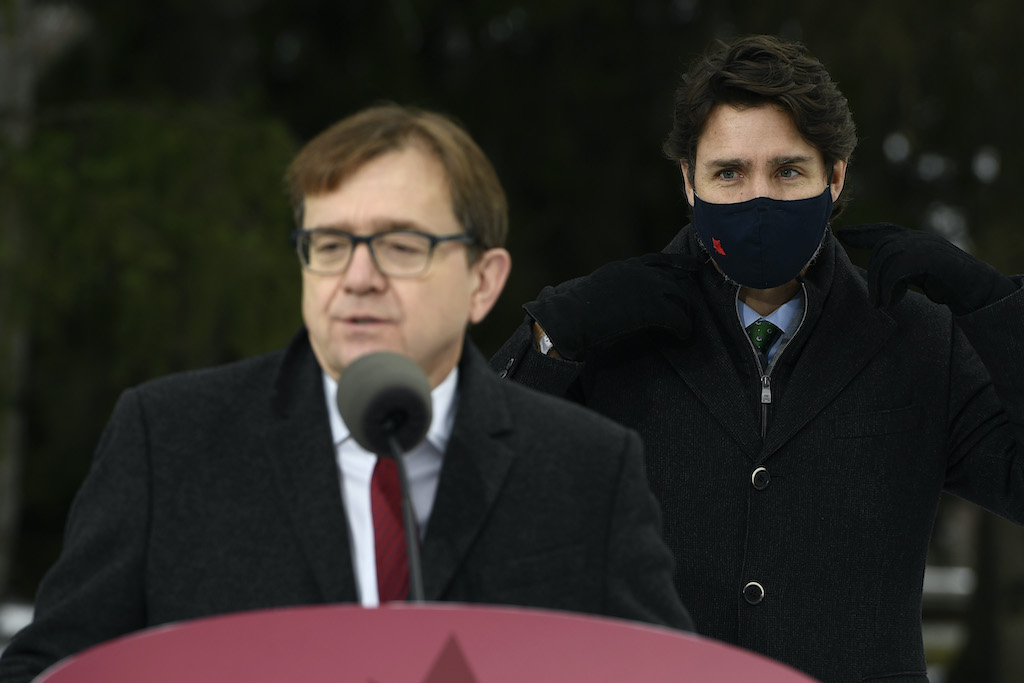
Wrangling funds for developing nations: Canada’s former environment minister (and newly minted minister of natural resources) Jonathan Wilkinson is co-leading a mission to raise a US$100-billion climate fund for developing countries. Wealthy nations agreed to back the fund at COP15 in Copenhagen in 2009, and Wilkinson and Germany’s State Secretary Jochen Flasbarth were meant to have the first round of funding ready for deployment in 2020. COVID-19 pushed the deadline to this year. Stakeholders had hoped COP26 would see an announcement the money had been raised. But on Monday, Wilkinson and Flasbarth said that the funds won’t be available until 2023. “Jonathan and I really pushed developed countries during the last weeks very hard and not all of our conversations were seen to be polite,” Flasbarth said in a press conference. So far, about 70 per cent of commitments are in the form of loans and the rest grants. Climate and social justice advocates say the missed deadline could erode trust that developed nations, which include some of the world’s biggest emitters, will pull their weight. “I think for developing nations, the success of COP26 really hinged on the delivery of that commitment,” said Turcotte.
Wilkinson and Flasbarth acknowledged the delay could compromise trust, but said donor countries will ultimately exceed the US$100-billion annual target through 2025. Canada has doubled its own commitment to the fund to $5.3 billion over five years, of which grants will make up 40 per cent, up from its initial plan of 30 per cent. But the setback has called Canada’s climate credentials into question ahead of COP26 and may set it up for heightened scrutiny in Glasgow.
Ramping up emissions targets: At the 2015 UN climate conference, nearly every country in the world signed the Paris Agreement—a legal commitment to reach net zero by 2050 in a bid to limit global warming to 1.5 C to 2 C. Climate scientists have since deemed the plan inadequate. The August report from the UN’s Intergovernmental Panel on Climate Change showed the world actually needs to cut emissions by 45 per cent below 2010 levels by the end of this decade. To get there, world leaders are expected to come to Glasgow with more ambitious emissions targets and details on how they will follow through on their pledges.
Canada has already committed to net zero by 2050—meaning it has said that by that year it won’t emit any more carbon than it removes from the atmosphere, either naturally, via trees and plants, or via carbon-capture technology. In April, Ottawa set new interim targets to cut emissions by 40 to 45 per cent below 2005 levels by 2030. Details on how it will achieve those targets are so far scarce, but the government has set an aggressive six-month timeline to produce a comprehensive plan for getting there, a plan that will include targets for individual sectors like oil and gas. “There’s opportunities for [Prime Minister] Justin Trudeau to reiterate these key commitments and say, ‘We’re tackling these big sources of emissions and here’s how we’re going to do it,’” said Turcotte. “And by doing so, those are really important signals to other nations.”
Canada is also expected to pressure its peers to sign on to the Global Methane Pledge. The federal government confirmed its support for the alliance earlier this month. By 2030, the group aims to reduce global methane emissions—a more potent greenhouse gas than CO2—by 30 per cent below 2020 levels.
Setting a global price on carbon: Stakeholders are also looking to Canada for leadership on establishing a global carbon-trading market. This is a major unresolved item—known as Article 6—from the Paris negotiations, and leaders are expected to work towards an agreement on it in Glasgow. That could involve creating universal accounting rules for trading carbon credits between countries, with the ultimate goal of shrinking net global emissions to zero.
The UN secretary general and the Carbon Pricing Leadership Coalition (CPLC), a World Bank initiative, have recommended setting an international minimum carbon price in service of that goal. The CPLC suggested Canada might be part of a small group of nations that would negotiate its parameters, citing the country’s “robust carbon pricing.”
Canada has had a national carbon-pricing system since 2019, designed as a backstop that applies to provinces whose own carbon-pricing mechanisms don’t meet the federal government’s minimum conditions. The levy currently charges emitters $30 per tonne of greenhouse gases produced, with the price set to gradually increase to $170 a tonne by 2030. The CICC’s Smith said that while Canada’s system isn’t without its flaws—for instance, he said it could be tougher on industrial emitters—aspects of it could inform a global model. “The flexibility of our carbon pricing is something other countries could adopt,” he said, adding that “there needs to be equivalencies for the system to work” but that Canada shows regional systems don’t need to be identical to get results.
Defining “green”: One of COP26’s broad goals is to get countries on the same page in their approach to tackling the climate crisis. That involves having common definitions for what counts as “green” or “sustainable.” The European Union is forging ahead with a taxonomy that would set those parameters in what could become the global standard. However, some policymakers and financial experts have called for a Canada-specific taxonomy to protect its resource-heavy economy. In 2019, an expert panel Ottawa launched to review Canada’s approach to sustainable finance recommended a domestic approach that doesn’t freeze out high-emitting sectors, like oil and gas, that are working to decarbonize their businesses.
The panel’s report said that unless an international taxonomy meets Canada’s particular needs, the country should “work either independently, or with other countries with similar resource endowments, to develop supplemental coverage for industry transition activities that are essential to Canada but not captured under current criteria.” John Stackhouse, RBC senior vice-president at the office of the CEO, cautioned against using “starkly different regional approaches,” but agreed with the need to create a system that includes companies transitioning to low-carbon operations. “It’s not going to be resolved at Glasgow,” he said, “but we’re expecting to build momentum there.”