Sponsored Content
Want to protect your business from the next crisis? Focus on your people
Don’t forget about your staff when creating a business resiliency plan

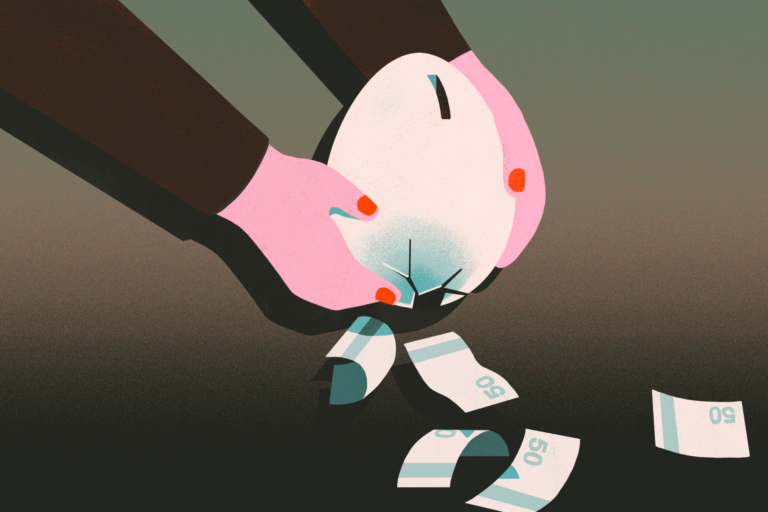
Photo: Illustration by Paul Kim

Sponsored by
Sponsored by
If the pandemic taught us anything, it’s that the next big crisis could be right around the corner. Whether it’s a tariff-induced recession—and 76 per cent of Canadian companies are bracing for one—a cybersecurity attack, supply chain disruptions, the rise of artificial intelligence, or an energy outage, the list of potentially business-altering scenarios is extensive.
Companies haven’t forgotten getting flat-footed during COVID-19, and many are preparing for the worst. “I was concerned there would be a downplay of business resilience because ‘we’ve been through this before,'” says Mark Hoffman, a business resiliency expert and president of Anesis Consulting Group. “But people realize they need to pay attention to the next thing.”
While executives must build in resilience in all facets of their organization, whether that’s examining their facilities, suppliers or business processes, making sure you’re planning for the health and well-being of your employees is just as important. If a crisis forces your company to close or results in layoffs or economic uncertainty, the mental health of your staff will be impacted. “We really have to take care of our people,” says Hoffman. “That means preparing them beforehand, but also standing with them and giving them the tools they need after.”
Offer the right tools
While there are many ways to create more resilient staff, such as giving them new skills if they have to shift jobs unexpectedly, one area to focus on is improving mental health support and ensuring the right employee assistance program (EAP) is in place.
New research by Sun Life found that 40 per cent of all long-term disability claims stem from a mental health disorder. A report from Dialogue, a Montreal-based company that offers virtual care solutions and EAP programs, found that 500,000 Canadians miss work because of mental illness every week. “There is a strong correlation between mental health and productivity,” says Marie-Chantal Côté, senior vice-president at Sun Life Health. “When you look at the overall mental health of employees, it can impact a company’s resilience.”
An effective EAP should include access to psychologists and therapists, virtual care options and digital tools to make it as convenient as possible for people to access the services, says Côté. But equally as important is communicating to staff that you have a plan.
Sun Life assumed EAP usage would increase at the start of the pandemic, but it was mistaken. The issue wasn’t the plan itself, says Côté, though. After doing some research, the company realized that staff didn’t know it had an EAP or how to access it.
The company did three key things to improve awareness: It increased communications about its programs, it made its EAP fully digital, integrating it into its mobile app, and it added a mental health coach, where a medical practitioner helps guide users to the most appropriate mental health resources in their plan. “The coach is really helpful,” says Côté. “The people who use it are using more of their psychology dollars, and we know if people seek treatment, it helps reduce short-term disability.”
Create an effective EAP
If you already have an EAP program, as many large organizations do, now is the time to assess whether a plan is working, in part because Dialogue has found people’s mental health is already declining. Every six months, the company records well-being scores of 13,000 Canadians. Between July and December 2024, overall well-being scores hit 43.7 out of 100, indicating that most people rate their mental health as poor. It’s a 11.5% drop from the scores recorded between January and June of last year. “The mental health of Canadians has not improved,” says Dr. Marc Robin, Dialogue’s medical director. “It’s low and staying low.”
The downward trend in mental health should be alarming for anyone engaged in business resilience planning, says Robin, as the next big challenge could make people’s mental health suffer even further. To identify whether your plan is effective, you’ll first want to track usage rates. Virtual health services, specifically, should be used at least twice as much as traditional services, he says. “You want a service that’s so accessible that it’s overused,” he says.
Benchmarking employee well-being is essential, too. Dialogue uses the World Health Organization’s well-being index to help companies see how their staff are doing. According to Robin, employees are more likely to use an EAP if they can see how they measure up against others. By tracking wellness scores alongside trends in productivity and absenteeism, employers can gain insights into whether their support programs are making a difference.
Related Articles

Also, having a way to measure a program’s success is critical because it’s difficult to justify investments without it, explains Robin. “Resiliency is not a slogan,” he says. During a crisis, people are your continuity plan, so putting programs in place is really important.”
Ultimately, resiliency planning is a journey, and it takes time to get it right. The health services you provide employees need to be refined and revisited to work. “You have to stay on top of it,” says Hoffman. “You can’t say, ‘My doctor said I was healthy last year, so now I can do what I want. ‘ That’s not how it works.
Outside of an EAP, Côté impresses the importance of not shying away from talking about mental health issues at work. Executives, especially, shouldn’t be shy to open up, says Côté, who adds that many of the top brass at Sun Life talk transparently about the things that keep them up. “It’s not about doom and gloom, it’s about here’s what I’m doing about it,” she says. “That’s what really changes hearts and minds. It creates a space where other people can do the same.”
This content was paid for and directed by Sun Life and was produced independently of The Logic’s newsroom in consultation with the advertiser. You can read our policies on advertising, sponsorships and partnerships here.



Loading...
Thanks for sharing!
You have shared 5 articles this month and reached the maximum amount of shares available.
CloseThis account has reached its share limit.
If you would like to purchase a sharing license please contact The Logic support at [email protected].
CloseGift the full article!
You have gifted 0 article(s) this month and have 5 remaining.
Recipients will be able to read the full text of the article after submitting their email address. They will not have access to other articles or subscriber benefits.