Listen Now
0:00
Amazon’s approach to union negotiations “materially contributed” to a standstill between itself and Unifor, according to a mediator appointed to help the two reach a collective bargaining agreement for workers at a warehouse in Delta, B.C.
Amazon’s position on some key issues “neuters the union from any input,” the mediator concluded in their report dated June 1 and reviewed by The Logic.
Talking Points
- The mediator appointed to help Amazon and Unifor reach a first collective agreement for workers at a Delta, B.C., warehouse has recommended the duo move to binding mediation-arbitration after being unable to come to a consensus on several key issues
- Amazon “materially contributed” to the impasse through its actions and positions, the mediator found in their report
The report, authored by mediator Mark J. Brown for the British Columbia Labour Relations Board (BCLRB), also found that Amazon’s desire to make changes to how union members worked without the union being able to challenge them “removed any meaningful collective bargaining” and “significantly impaired” the ability for the parties to come to an agreement through the typical bargaining process. Amazon has also taken an “uncompromising position without a reasonable justification” on many issues in the negotiations.
As a result of a breakdown in the relationship between the two parties, the mediator has recommended that an independent arbiter be appointed to finalize the collective agreement.
Related Articles
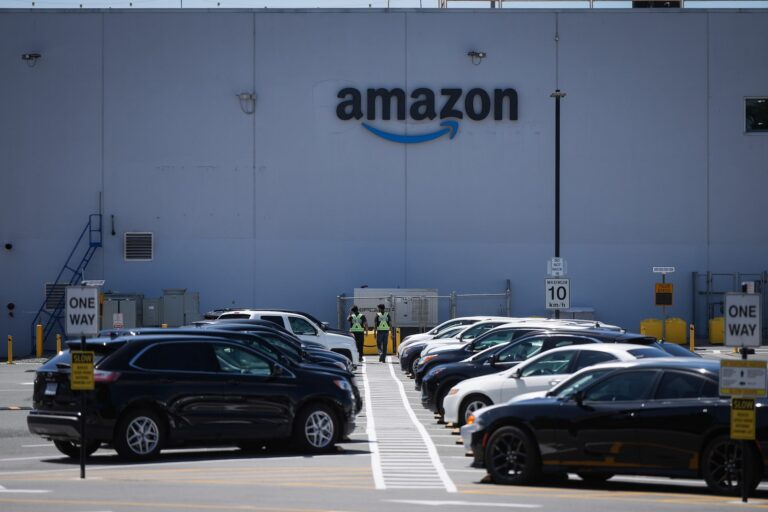
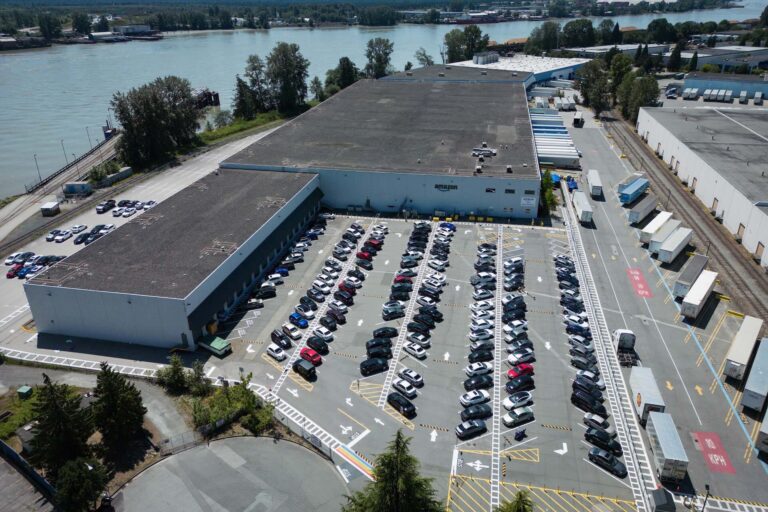
“We reject these characterizations and will continue working through the appropriate channels to reach resolution,” said Amazon spokesperson Sam Stephenson, who declined to answer specific questions about the mediator’s report. “We’ve bargained in good faith from the start of this process—reviewing and discussing comprehensive proposals and engaging constructively at every stage of mediation.”
Unifor western regional director Gavin McGarrigle said that binding arbitration is not the union’s first choice for negotiations but that “Amazon’s bargaining tactics were beyond the pale.”
Amazon and Unifor have been attempting to reach an agreement since a June 2025 BCLRB ruling that hundreds of workers in Delta could unionize without a successful vote. The decision came after Unifor filed a complaint, alleging Amazon had inflated staff numbers to circumvent the unionization effort. Amazon, which has denied the allegations, is challenging the ruling in the Supreme Court of British Columbia.
Meanwhile, Unifor has filed two unfair labour practice complaints against Amazon with the BCLRB, and so far received one ruling in its favour. In February, the BCLRB ordered Amazon to extend wage increases to the unionized workers after Unifor complained the company had unfairly withheld it.
At the same time, Amazon and Unifor have been trying to come to a collective agreement. They met over 11 days between October and February, according to the mediator’s report. In February, Unifor asked the BCLRB to impose mediation, claiming Amazon had been delaying the process.
Brown met with Amazon and Unifor over five days before telling them he did not believe he was likely to recommend an agreement that they would both accept. He outlined several areas where the two seemingly can’t come to a consensus.
Productivity, quality and inactive time was “a contentious issue,” Brown wrote in his report, with Amazon wanting the right to make changes unilaterally in the future to keep its policies for Delta in line with other, non-unionized facilities in B.C. It said the union would not be able to challenge such decisions. The union rejected this and proposed new health and safety standards, which Amazon in turn rebuffed.
Another major issue was how Amazon manages employee attendance, according to the report. Here, Brown found that the union would accept Amazon’s position about unilateral changes on the condition that the company agree to its proposals on health and safety. Amazon refused.
The parties also failed to agree to salary increases. The union suggested four per cent in the first year and 3.5 per cent per year for each of the next two years, or the same salary bump that is given to staff at other facilities in the Lower Mainland should it be higher. Amazon offered 2.5 per cent for the first year and two per cent for the second.
Additionally, Unifor wanted all current employees to be union members, while Amazon preferred staff have a choice. The union asked for seniority to impact schedules and overtime offers, and for permanent changes to require 90 days notice, while Amazon wanted to keep its existing scheduling policies and for overtime to be offered on a first-come, first-served basis via its app.
Elsewhere, Unifor wanted more paid time off for staff and those with 10 or more years of service to get extra vacation—Amazon rejected both proposals. The union asked for temporary or seasonal workers to be designated as those that have been with Amazon for no more than six months, while Amazon wanted to keep it at 12 months. The two parties also could not agree on how to handle health and disability benefits.
Brown declined to comment on whether either party’s proposals were reasonable or not in his report, but placed much of the blame for the talks breaking down on Amazon’s conduct.
While Amazon’s spokesperson in the negotiations asserted that the company’s approach was “normal,” Brown argued it wasn’t. He also found that Amazon’s late tabling of a wage proposal “materially slowed the pace of bargaining and impeded meaningful discussions” on other provisions.
Brown acknowledged that Amazon’s desire to keep operations across its warehouses consistent is not unusual but added that its position that it should have the right to make changes to important policies, and that the union shouldn’t have the right to challenge such changes, was “over and above” the norm.
Brown asked Amazon and Unifor how they would prefer to proceed: work with a mediator who can arbitrate anything they can’t agree on, work with an arbitrator, or allow either one of them to exercise their right to a strike or lockout.
Amazon asked for the strike or lockout, arguing that it had participated in good faith. It said there were “no compelling reasons” for the mediator to recommend anything else. The union preferred arbitration or, at the very least, working with a mediator who could arbitrate portions of the talks.
The mediator agreed with the union’s backup choice and has recommended mediation-arbitration to break the deadlock. The BCLRB will make a final decision on how the parties proceed. Board information officer Julie Griffith did not say when a decision could be expected.
The efforts in Delta follow the successful unionization of an Amazon facility in Laval, Que., in May 2024. In January 2025, Amazon announced that it would close all of its fulfillment and sorting facilities in the province. At the time, the company said the move was unrelated to the unionization in Laval.